Between land and sea
Mangrove kayaking in Martinique: choose the right trip
A kayak can enter mangrove channels quietly, but trips sold as 'mangrove' differ greatly. Some stay sheltered; others add an exposed bay crossing or islets. Compare the actual route, supervision and local rules before booking.
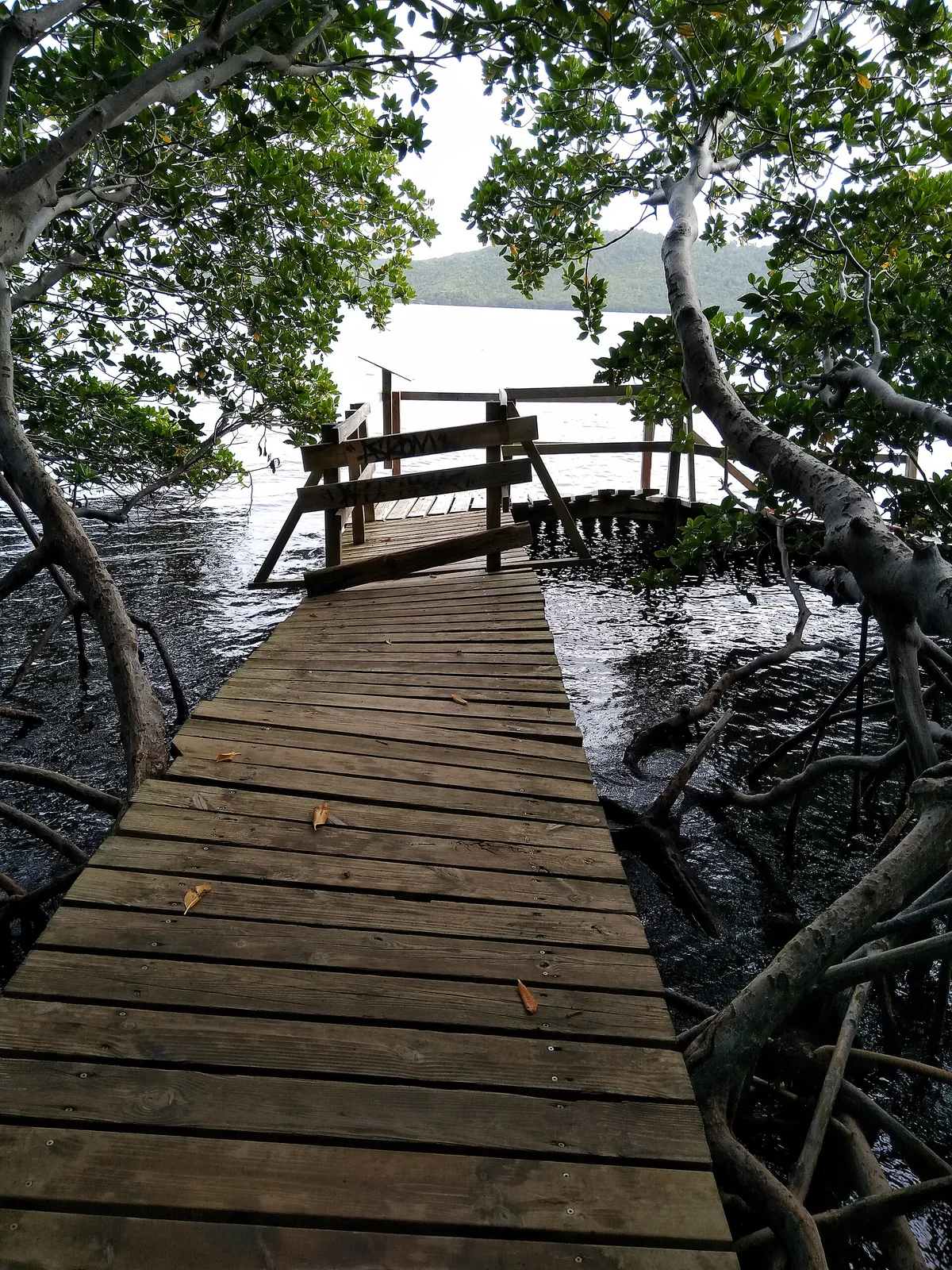
Not all “mangrove” trips are comparable
An advert may mean a slow loop through sheltered channels, a bay crossing before reaching the mangroves or a day combining mangrove, islets and Fonds Blancs. The advertised duration does not tell you how long you will paddle in open water or how much time is devoted to interpretation.
Ask for a route or precise description: approximate distance, sections exposed to wind, places where the group can turn back, kayak type and number of participants per guide. A short, well-explained channel route can offer more than a long crossing where the mangrove is only one stop.
The Martinique Tourism Committee provides a current overview of mangrove areas visitors can discover. Use it to identify sectors, then confirm the actual activity and conditions with the provider.
Which area should you choose?
| Area | A good fit if… | Clarify this point |
|---|---|---|
| Génipa Bay | you want to understand a large mangrove from the centre or Les Trois-Îlets | departure point and proportion in sheltered channels |
| Vatable forest / Maison de la Mangrove | you prefer land-based interpretation alongside a wetland | activities genuinely available on your chosen day |
| Caravelle / Baie du Trésor | you want to connect mangroves, the reserve and Atlantic coastline | navigation allowed within the expanded marine reserve |
| Robert Bay | you accept a trip that may include open water and islets | wind exposure and fallback route |
| François Bay | you seek a more maritime trip with shoals | actual time in mangroves, traffic and local rules |
Génipa Bay: the clearest first-time choice
Génipa Bay borders several municipalities and has multiple approaches. DEAL Martinique publishes a geological inventory page about the Génipa mangrove, the island’s largest. That reference describes the environment; it is not a timetable, kayak offer or access authorisation.
For a first outing, look for a loop that remains mostly sheltered, begins at an easy pontoon and includes a naturalist guide. Starting from Canal Petite Cocotte, Vatable or another point does not automatically provide the same route. Confirm the address and parking area.
Caravelle: favour interpretation on foot
Caravelle has boardwalks and trails where visitors can see mangroves without taking to the water. It is a good option for anyone who does not want to paddle or when wind makes kayaking unsuitable. Our Caravelle peninsula guide explains the walking-loop choices.
Since December 2025, Baie du Trésor has been included in the expanded marine boundary of the nature reserve. Consult the current legal documents collected by DEAL Martinique. Never assume an old water route, GPS track or landing area remains permitted.
Le Robert and Le François: a more maritime experience
Atlantic bays can combine mangroves, islets and shoals. They suit visitors wanting a real sea outing, but exposure must be understood. Wind can make the return much harder than the outward leg, especially in a double kayak with poorly coordinated paddlers.
Ask whether support by boat is available, whether the guide adapts the route to the group and how much takes place in open water. An outing marketed as family-friendly still needs to be assessed for each child’s age, swimming confidence, kayak weight and the actual weather.
Guided trip or independent hire?
Choose a guided outing if you do not know the channels or local wind, if you are a beginner or if understanding the ecosystem is your main goal. The guide should explain the route before launch, check every buoyancy aid and show the group how to stay together without blocking a channel.
Independent hire is reasonable only when the company provides an authorised area, usable map, return time, contact and procedure for changing winds. A navigation app does not replace this information. In a maze of mangrove channels, one wrong turn can greatly extend the route.
Decline the hire if nobody asks about your ability or checks the weather. A kayak being available does not mean the outing is suitable.
Weather and navigation checks
Read the Météo-France coastal marine forecast and Martinique warnings. Ask the guide how the wind direction specifically affects the route. A bay that looks calm from the road may include an exposed section farther out.
The Direction de la Mer gathers navigation rules and maps by municipality. Respect channels, prohibited areas, speed rules, anchoring controls and protected boundaries. A kayak is not exempt merely because it is quiet and unpowered.
After heavy rain, water may carry debris and water quality may be affected. Ask whether the departure is proceeding, and do not enter a channel in flood or with an unusual current.
Equipment to require and bring
The provider should supply every participant, including children, with a suitable buoyancy aid in good condition. Wear it fastened throughout the trip. Ask for a correctly sized paddle and a plan for emptying or towing a kayak if required.
Bring:
- drinking water that is accessible without unpacking the whole bag;
- a wind-secured hat and covering clothing;
- sun protection and attached sunglasses;
- a charged phone in a genuinely waterproof pouch;
- a small personal kit for medication, bites or minor cuts;
- closed shoes or secure sandals if landing is planned;
- dry clothing left at the return point.
Do not improvise a line that attaches your body to the kayak: it can create an entanglement risk. Use only a system taught by the professional for that particular route and craft.
Among the mangrove trees
Keep paddle and hull away from roots. Do not grab branches to pull the kayak or cut a passage. Stay in the designated channel even when a shortcut looks navigable.
Slow down around birds and crabs. Do not shout or play recorded sounds to attract wildlife. Feed nothing, pick no leaves and never land on an islet or bank without explicit permission.
A mangrove is not a clean, still backdrop: mud, natural smells, insects, branches and changing water levels are part of the environment. A serious operator explains them rather than promising a particular animal.
With children
Ask about the provider’s age, weight and swimming-confidence requirements; these depend on craft and route. A child needs a correctly sized buoyancy aid, not a shared adult one, and must sit with an adult able to control the kayak.
Choose a short, sheltered route with an exit option over a trip combining a long crossing and many stops. Sun and sitting still can tire children as much as paddling. The guide should have a genuine return plan if a child cannot continue.
Questions to ask before paying
- Where exactly does the trip begin and end?
- How much is sheltered channel and how much is open bay?
- Who guides it, how many kayaks do they supervise and what naturalist interpretation is included?
- Which buoyancy-aid and kayak sizes are available?
- Which conditions trigger a route change, postponement or cancellation?
- Does the route enter a reserve or another area with specific rules?
- Is assistance available if someone cannot continue paddling?
Clear answers matter more than a wildlife promise or a photograph taken in an unidentified channel.
Where to stay for a mangrove trip
Les Trois-Îlets and the centre give practical access to Génipa Bay. An Atlantic base makes more sense for Caravelle or Le Robert but is less convenient for some south-west outings. If kayaking is only one of several priorities, choose accommodation for the whole itinerary with where to stay in Martinique.
Useful points on the ground
Addresses and maps
Maison de la Mangrove and Vatable forest
Les Trois-ÎletsFranceAn interpretation point near Génipa Bay; confirm current activities and access with the PNRM.
Génipa Bay
DucosFranceA large mangrove approached from several starting points; your guide or hire company must provide the exact route.
Baie du Trésor and Caravelle
La TrinitéFranceThis area is included in the expanded nature reserve; do not navigate without knowing the current rules.