Agoa Sanctuary
Dolphin tours in Martinique: choose a responsible trip
A successful cetacean trip is not measured by how many animals a boat approaches. It starts with a trained, authorised professional, conditions suited to the vessel and an experience that remains worthwhile if no dolphin appears.
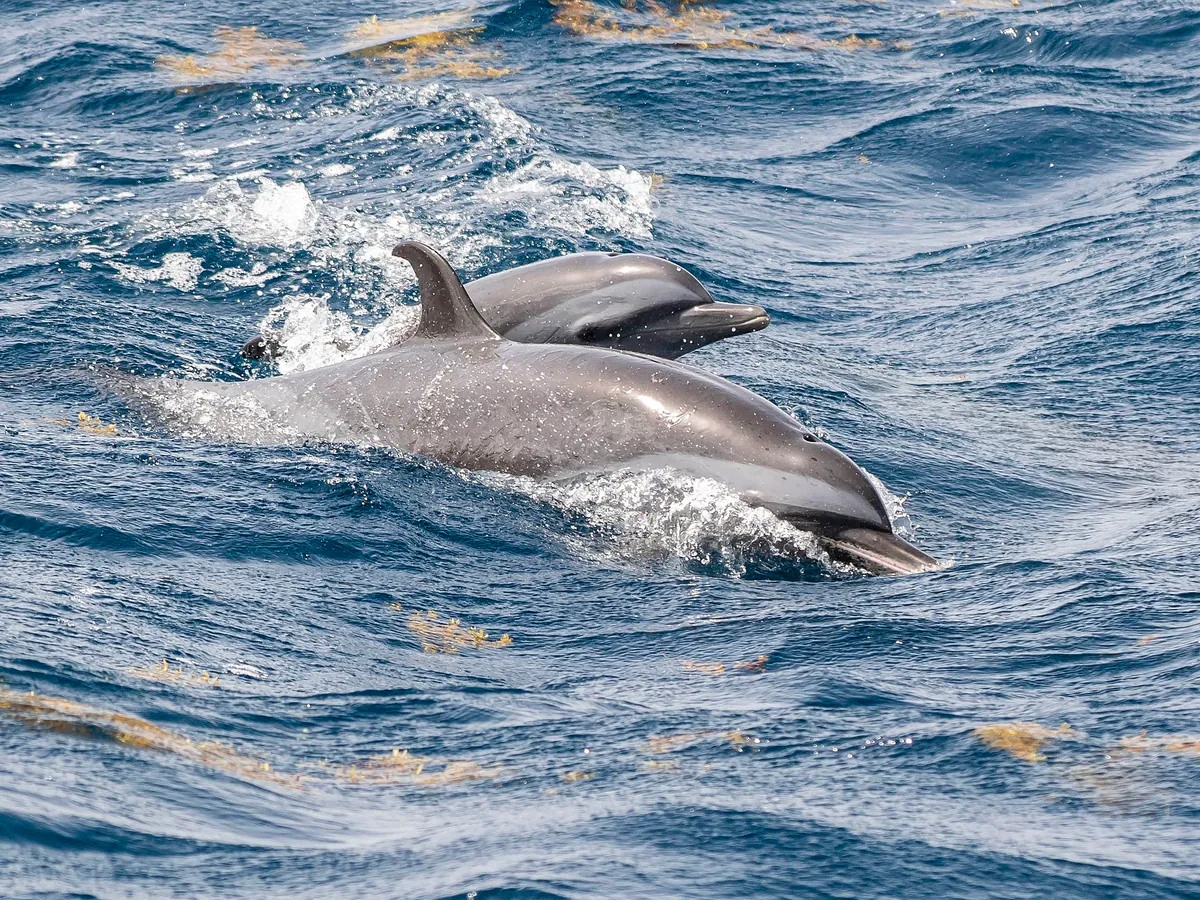
First check: Agoa authorisation
All French exclusive-economic-zone waters around Martinique are part of the Agoa Sanctuary. Marine mammals are protected there. The general rule prohibits approaching within 300 metres, whether on, under or above the water.
An exemption applies only to professionals trained by Agoa and authorised by the Direction de la Mer, allowing them to approach to 100 metres under a protocol. The sanctuary publishes an official list of trained and authorised professionals. Consult it, then ask the operator to confirm that its authorisation remains valid for your trip.
A vague claim such as “dolphin friendly”, an unexplained logo or a large number of reviews is not a substitute for this check.
No trip can guarantee a dolphin
Cetaceans are wild and mobile. Their presence depends on factors an operator cannot control. A guaranteed-encounter promise can encourage prolonged searching, speed and boat congestion around a group of animals.
Ask what the trip includes when there is no sighting: coastal interpretation, information about species, listening or distant observation when allowed, maritime heritage and a sensible amount of navigation. A responsible professional states clearly that the boat may return without seeing a cetacean.
Be wary of offers promising:
- a specific number or species;
- swimming with dolphins or whales;
- contact, feeding or a close-up photograph;
- pursuit until every passenger gets an image;
- the same route in all sea conditions.
Rules during an encounter
Read the Agoa Sanctuary’s good-practice guide for cetacean observation before boarding. It prohibits contact, feeding and entering the water to swim with marine mammals.
If animals approach a boat on their own, Agoa says not to seek interaction, chase them or cut across their route, and to maintain a parallel course. Speed must be reduced to five knots and acoustic disturbance limited. Remain on board and let the animal decide when to move away.
As a passenger, do not urge the skipper to move closer. Do not shout, play sounds to attract animals or extend a pole toward them. A long lens or binoculars provides a better view without reducing the distance.
Which departure point should you choose?
Professionals may board from different points along the Caribbean coast, including areas around Les Trois-Îlets, Fort-de-France, Case-Pilote, Le Carbet and Saint-Pierre. The exact list changes. Do not choose accommodation from an old listing: ask for the pontoon, required arrival time and parking arrangements before the cancellation deadline.
A nearer boarding point does not necessarily mean a shorter journey at sea. Ask which area the operator expects to visit, while accepting that weather and information shared among professionals may change the route.
For a half-day, favour straightforward boarding and a duration suited to children or passengers prone to seasickness. A full-day trip combining swimming and food should state separately how long is spent searching for cetaceans, at stops and in the water.
Choose the boat and group size
A small boat can offer a direct sense of the sea but may move more and have less shade or fewer facilities. A catamaran or larger vessel often provides more space but carries a bigger group and offers a shared view. Neither format is always better.
Ask about:
- maximum passenger number and genuine seated space;
- shade, shelter and toilets;
- boarding for children and people with limited mobility;
- available buoyancy equipment in each size;
- whether passengers can remain seated during observations;
- the naturalist experience of the person interpreting the trip;
- the protocol if someone becomes ill or wants to return.
Marketing photographs taken on flat water do not show vessel movement or ease of boarding. Ask questions that match your group.
Weather and seasickness
Check the Météo-France coastal marine forecast and Martinique weather warnings. Only the operator can interpret the forecast for its vessel and route. A trip that still runs may remain uncomfortable for a very sensitive passenger.
If you are prone to seasickness, seek advice from a health professional about treatment suitable for you; some products cause drowsiness. Eat lightly, stay hydrated, look at the horizon and use the part of the vessel recommended by the crew. Tell them as soon as symptoms begin.
Do not insist on departing merely because you paid. Before booking, read what happens when the operator cancels and what rescheduling or refund terms apply if you decide not to go.
With children
Ask the provider directly about minimum age, because it depends on the vessel, duration and conditions. Confirm that a correctly sized lifejacket, shade and a safe seated area are available.
Prepare the child for seeing nothing. Binoculars, a coastal map and a small observation notebook make the outing interesting without turning an animal into a reward. An adult remains responsible for the child while people move on deck; the crew does not replace that supervision.
Photograph without pressuring the animal
Use a reasonable burst mode and sufficiently fast shutter speed instead of asking for another approach. Secure the camera strap and do not lean past protective rails. Disable artificial sounds and avoid monopolising one side of the boat.
A distant image including the landscape tells the sanctuary story better than a tight frame obtained by reducing distance. Do not share a precise live position that could draw unauthorised boats toward the animals.
If you encounter cetaceans in your own boat
Do not copy the path of an authorised professional. Remain beyond 300 metres, do not cross the animals’ route and do not insert your vessel among other boats. If cetaceans approach spontaneously, reduce speed, limit noise, stay out of the water and leave them a clear way out.
The Direction de la Mer provides local navigation rules and maps. Check them before departure; respecting Agoa distance does not replace other navigation, anchoring and safety rules.
Questions to send an operator
- Are you currently on Agoa’s list of trained and authorised professionals?
- Which vessel will be used, with how many passengers and what equipment?
- What does the trip include if no cetacean is seen?
- How do you limit time and boat numbers around a group of animals?
- Where exactly is the meeting point, and what boarding constraints should we know?
- Which sea conditions trigger a reroute, postponement or cancellation?
- Is any swimming stop entirely separate from cetacean observation?
The answer to the last question should be unambiguous: nobody enters the water to swim with a dolphin, whale or other marine mammal.
Plan the day and accommodation
Do not place a fixed-time activity far from the harbour immediately after the trip. The route and return can change with the sea. Keep a flexible Saint-Pierre, Le Carbet or Les Trois-Îlets visit depending on the boarding point.
If this trip is a priority, wait for pontoon confirmation before selecting an area in where to stay in Martinique. For an alternative without offshore navigation, compare other things to do in Martinique and keep a land-based plan.
Useful points on the ground
Addresses and maps
Pointe du Bout
Les Trois-ÎletsFranceSome sea trips use this area; only your operator can confirm the current pontoon.
Saint-Pierre
Saint-PierreFranceA north Caribbean reference point; departure points and routes vary with the operator and sea conditions.