Sugar cane, skills and heritage
Rum distilleries in Martinique: choose a visit and plan the route
A historic habitation, a working distillery and a rum shop do not offer the same experience. Decide what you want to understand, then confirm the route available that day.
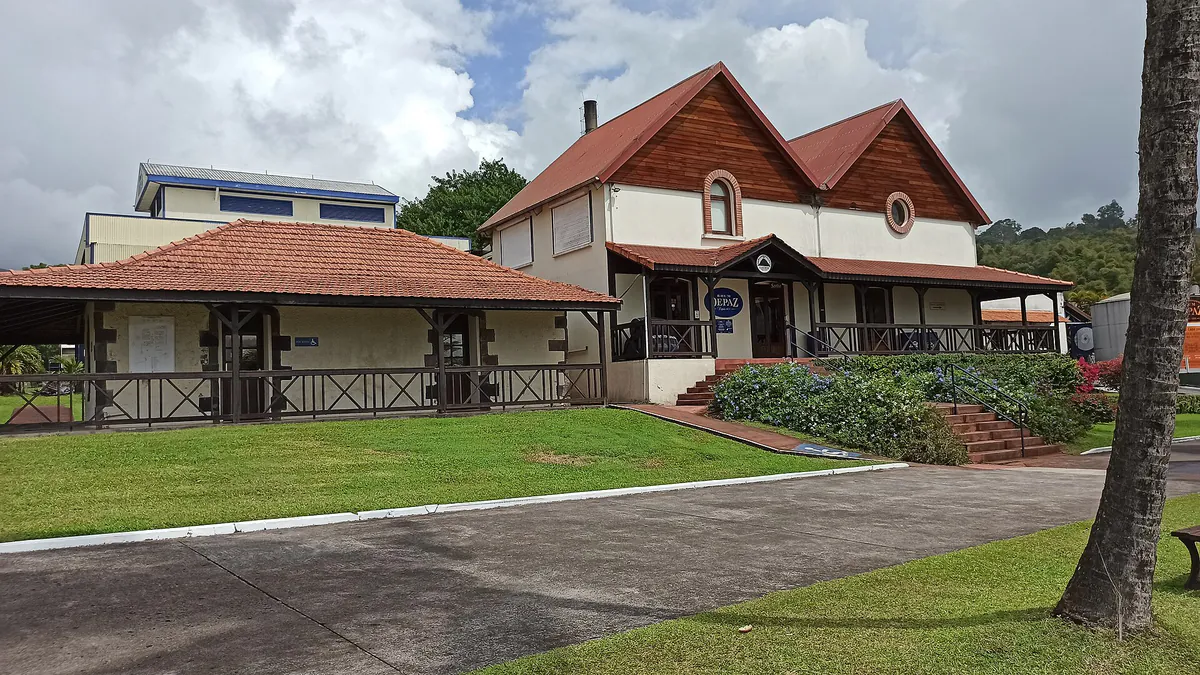
Martinique is known for agricole rum, made from fresh sugar-cane juice. The official AOC specification defines the categories and rules for “Rhum de la Martinique”. This appellation describes a product and its production rules; it does not mean every site offers the same visit.
Three experiences that are often confused
| Type of place | What you might look for | Ask before travelling |
|---|---|---|
| Working distillery | Cane, crushing, fermentation, column still and industrial organisation | Will production be visible on this date? |
| Historic habitation | Architecture, estate history, gardens and interpretation | Which spaces are included, and which require a ticket or guide? |
| Museum, ageing cellar or brand site | Rum history, ageing, collections and tasting | Is the route self-guided or guided, accessible and available in your language? |
An impressive shop does not prove that production equipment is running that day. Conversely, an active industrial site may be fascinating even if its landscaping is simple.
Choose by area, not by logo
The Martinique Tourism Committee maintains a directory of distilleries and rum producers. Use it to open each venue’s current listing, then check the venue’s own site.
North Caribbean coast
Depaz fits naturally into a day in Saint-Pierre. Neisson in Le Carbet is another reference point on the same corridor. Choose one in-depth route if you also want time to understand the remains of 1902.
North Atlantic coast
Saint-James in Sainte-Marie and J.M around Macouba create a different route through wetter northern landscapes. Check the return route before adding several stops.
Centre and Atlantic side
Habitation Clément in Le François is often chosen for the estate as a whole: its gardens, art, history and ageing facilities. Ask whether your main interest — production, heritage or tasting — matches what the route actually offers.
South
Several rum names are associated with southern Martinique. Do not build a zigzag “rum route”: choose one area, consult official sites and add a nearby town or beach only if the day still has a sensible margin.
These names are orientation points, not an opening guarantee or a ranking.
Production season changes what you see
Cane is not processed in the same way throughout the year. Outside a production period, a site may remain open while its machinery is stopped. If watching crushing or distillation matters to you, ask explicitly whether that stage will be operating during your visit.
Also ask about:
- self-guided or guided format;
- whether your intended time requires a reservation;
- interpretation language;
- terrain, stairs and walking distance;
- policies for children;
- production zones closed to the public;
- whether it is possible to visit without joining a tasting.
Taste without compromising the return journey
Rum is a strong spirit. The designated driver should not taste before driving again. Make that decision before reaching the counter, and never base the return on an assumption that a small amount has no effect.
To compare products, read the label: appellation, category, alcohol by volume and bottle volume. Ask how to transport a bottle and check your airline’s baggage rules. A purchase made in an ordinary on-site shop is not automatically exempt from cabin-liquid restrictions.
Keep the historical account complete
Sugar-cane landscapes and habitations cannot be separated from colonialism and slavery. A responsible visit goes beyond production techniques and gardens. Look for how the site discusses labour, ownership, enslaved people, life after abolition and changes in the industry.
Complement the distillery with a venue whose interpretation centres those histories, and read our culture and food guide.
Reliable sources for planning the route
- the French Ministry of Agriculture’s Rhum de la Martinique specification, for the AOC definition;
- distilleries and rum producers, Martinique Tourism Committee, for current venue listings;
- rum culture in Martinique, for broad context;
- the selected distillery’s own website, for access, reservations and the day’s route.
Always verify current conditions: visible production, open areas, guided visits, accessibility, age restrictions and the return road.
Useful points on the ground
Addresses and maps
Depaz
97250 Saint-PierreMartiniqueA north Caribbean option to combine with Saint-Pierre; confirm which areas visitors can access on your date.
Habitation Clément
97240 Le FrançoisMartiniqueA route focused on the habitation, gardens, art and ageing cellars; do not assume you will see active distillation.
Saint-James
97230 Sainte-MarieMartiniqueA north Atlantic reference point; verify the activities offered and their schedule directly.